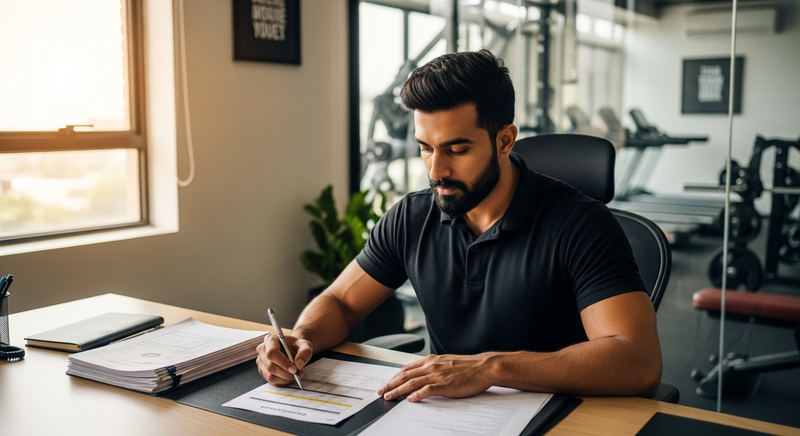
A gym owner in Pune once told us he spent ₹18 lakhs on commercial treadmills before his gym even opened — only to realise he'd left almost no budget for free weights, benches, or a proper functional training zone. His members joined expecting a full-floor experience. What they got was a cardio room. Renewals tanked within three months.
Sound familiar? Across India, gym owners — first-timers and veterans alike — routinely overbuy in one equipment category while starving another. Or they underestimate costs entirely and run out of capital mid-setup. Equipment planning without a clear framework is essentially guesswork with a ₹10–50 lakh price tag attached.
That's why we built the free Gym Equipment Cost Calculator — to give Indian gym owners a structured, number-driven way to plan equipment purchases before committing to a single vendor invoice. In this post, we'll walk you through the key equipment categories, realistic budget ranges by gym type, and the most common (and costly) mistakes to avoid.
Why Gym Equipment Cost in India Varies So Wildly
Ask five vendors what gym equipment costs in India, and you'll get five completely different answers. That's because "gym equipment" is a broad umbrella covering everything from a ₹3,000 resistance band set to a ₹4 lakh commercial treadmill. The variation isn't random — it depends on several factors:
Before you even speak to a vendor, plan your gym space layout carefully so you know exactly how many square feet each equipment zone will occupy. This directly informs your equipment list — and your budget.
Equipment Categories Every Gym Owner Should Budget For
Most gym owners mentally split their equipment into "big machines" and "small stuff." That mental model gets people into trouble. Here's a more useful breakdown by functional category:
1. Cardio Equipment
Treadmills, ellipticals, stationary bikes, rowing machines, and air bikes. These are the highest-visibility items in any gym and often the first thing prospective members check. They're also the most expensive to buy and maintain.
Typical cost range (India, 2025–26):
A 2,000 sq ft gym typically needs 8–12 cardio units. Budget accordingly.
2. Strength & Resistance Equipment
This includes multi-station cable machines, pin-loaded machines (chest press, leg press, lat pulldown), plate-loaded machines, and Smith machines. This category is where most mid-range gyms see the best return on member satisfaction.
Typical cost range:
3. Free Weights & Benches
Dumbbells, barbells, Olympic plates, EZ bars, and benches. Despite being "small stuff," a complete free weight setup with a rack system can easily run ₹3–8 lakhs depending on the range you stock.
Don't underestimate this category. Free weights are the most-used equipment in any general fitness gym, and members notice immediately if your dumbbell set jumps awkwardly from 10 kg to 30 kg.
4. Functional Training Zone
Kettlebells, battle ropes, plyo boxes, resistance bands, TRX/suspension trainers, pull-up rigs, and turf. This zone has become almost mandatory for gyms targeting the 22–35 age group in metro and Tier 1 cities.
Budget: ₹1.5–5 lakhs depending on depth and branded equipment choices.
5. Flooring
Rubber flooring, foam mats, and turf are not optional. They protect your equipment, protect your members, and protect you from liability. Many owners forget to include flooring in their equipment budget entirely.
Typical cost: ₹60–₹150 per sq ft for commercial rubber flooring. For a 2,000 sq ft gym, that's ₹1.2–3 lakhs just in flooring.
6. Recovery & Ancillary Equipment
Foam rollers, massage guns, stretching stations, boxing bags, and skipping ropes. These are often bought as an afterthought but can meaningfully improve member experience with a relatively small investment.
Budget Benchmarks by Gym Type
Here's a realistic starting-point breakdown for gym equipment cost in India based on gym format. These are ballpark figures — your actual numbers will shift based on brand choices and gym size.
| Gym Type | Equipment Budget Range |
|---|---|
| Small neighbourhood gym (1,000–1,500 sq ft) | ₹8–15 lakhs |
| Mid-size fitness centre (2,000–3,000 sq ft) | ₹18–35 lakhs |
| Premium gym / boutique studio (3,000+ sq ft) | ₹35–80 lakhs+ |
| CrossFit box | ₹10–20 lakhs |
| Yoga / Pilates studio | ₹2–8 lakhs |
| Ladies-only gym | ₹8–18 lakhs |
These numbers can shift significantly based on whether you go new or refurbished, domestic or imported brands. Use the Gym Equipment Cost Calculator to build a precise estimate for your specific setup — it takes less than five minutes and gives you a category-by-category breakdown you can take to vendors.
Also worth noting: equipment is just one slice of your total opening cost. Factor it alongside rent, interiors, licensing, and staffing using the Gym Opening Cost Calculator for a complete picture.
The 5 Most Expensive Equipment Mistakes Indian Gym Owners Make
Mistake 1: Buying Cardio-Heavy, Strength-Light
It feels safer to invest heavily in treadmills — they look impressive in promotional photos. But members who come for strength training (a fast-growing segment, especially women) will leave quickly if your free weight section is sparse. Balance your equipment allocation across categories.
Mistake 2: Skipping the Flooring Budget
Gym owners regularly call vendors for machines and benches but mentally file "flooring" under interiors. Then they get a shock when the contractor quotes ₹2 lakhs for rubber mats. Include flooring in your equipment budget from day one.
Mistake 3: Buying for Today, Not for 12 Months From Now
If you're planning to grow from 100 to 300 members in year one, your equipment needs at month 12 will look nothing like month one. Plan equipment in phases. You don't need everything on day one — but you should know what Phase 2 will cost before you sign Phase 1 purchase orders.
Pair this with your revenue projections. Our Gym Revenue & ROI Calculator can help you model when you'll have the cash flow to add the next round of equipment.
Mistake 4: Ignoring AMC and Maintenance Costs
Equipment breaks. Treadmill belts wear out. Cable machines need lubrication and cable replacement. Annual Maintenance Contracts (AMCs) for commercial gym equipment typically run 8–12% of equipment value per year. If your equipment costs ₹25 lakhs, budget ₹2–3 lakhs annually just for maintenance. This is an ongoing expense that should be included in your monthly gym expense planning.
Mistake 5: Trusting the Vendor's "Recommended List" Blindly
Vendors are in the business of selling equipment — more of it, at higher price points. Their recommended list is a starting point for a negotiation, not a blueprint for your gym. Come to every vendor meeting with your own equipment list and budget envelope already defined.
How to Use the Gym Equipment Cost Calculator
Our free Gym Equipment Cost Calculator is designed specifically for Indian gym owners. Here's what it helps you do:
Think of it as your first line of defence against both overbying and underbuying. Once you have a baseline estimate, you're negotiating from a position of knowledge rather than dependency on a vendor's quote.
Phased Equipment Buying: A Smarter Approach
Not every gym owner has ₹30 lakhs liquid on day one — and that's completely fine. A phased buying strategy lets you open sooner, validate demand, and expand equipment as revenue grows.
Phase 1 (Opening Day): Core cardio (6–8 units), basic strength machines (3–4 stations), full free weight range (5–50 kg dumbbells), benches, and flooring. This gets you operational and member-ready.
Phase 2 (Month 3–6): Add functional training zone, additional cardio units, and specialised machines based on actual member demand. By now you'll know whether your crowd wants more cable machines or more kettlebells.
Phase 3 (Month 9–12): Premium additions — turf zone, recovery area, group fitness room equipment — funded from operating profit rather than opening capital.
This phased approach also gives you better data for your gym business plan and makes conversations with lenders or investors significantly more credible.
Connecting Equipment to Member Experience
Equipment planning isn't just a finance exercise — it directly determines member retention. A gym where members regularly queue for the only two functional cable machines, or where the dumbbell rack is missing the 20 kg pair, is a gym that loses renewals quietly.
Track equipment utilisation once you're open. If certain machines are always occupied and others gather dust, that's data for your Phase 2 buying decisions. And once members are in the door, make sure your operational systems are as well-planned as your equipment — from managing member check-ins with biometric or QR attendance to automating membership renewal reminders via WhatsApp so your investment in great equipment is backed by great service.
The gyms that retain members long-term are those that pair a well-equipped floor with a seamless operational experience. Equipment gets them in — systems keep them renewing.
Start With a Plan, Not a Purchase Order
The single most important step you can take before speaking to any equipment vendor is to build your budget estimate first. Know your total envelope, your category allocations, and your phasing plan. Then go to vendors with a clear brief rather than an open cheque.
Use the free Gym Equipment Cost Calculator to build that estimate right now — it's free, takes under five minutes, and could save you lakhs in poor purchasing decisions.
And once your gym is up and running, make sure your management software is as well-organised as your equipment floor. Explore how MyGymDesk helps Indian gym owners manage members, billing, staff, and more — or start a free trial and see it in action from day one.
Because great equipment deserves a great operation behind it.