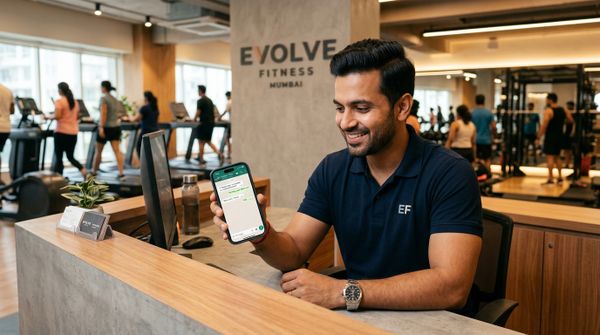
Have you ever watched a paying member turn around and walk out because your Zumba class was packed wall to wall — again? Or received an angry WhatsApp message from someone who "booked" a Pilates slot only to find 12 other people with the same understanding? Gym class overbooking in India is far more common than most gym owners care to admit, and it is quietly destroying the member experience you have worked so hard to build.
The group fitness boom is real. From Zumba and yoga to HIIT and functional training, Indian members are increasingly choosing gyms based on the quality and availability of group classes — not just equipment. But with that popularity comes a very unglamorous operational problem: more members wanting the same slot than your studio floor can safely hold. If you are still managing class bookings through WhatsApp chats, a paper register, or a shared Google Sheet, you already know how quickly things unravel.
This post walks you through why gym class overbooking happens, what it actually costs your business, and a practical, structured approach to fixing it once and for all.
Why Gym Class Overbooking Is So Common in India
The root cause is almost always the same: manual booking systems that have no enforcement mechanism. A trainer tells a member to "just message on WhatsApp" to reserve a spot. The member obliges, but so do 20 others — and nobody is counting in real time.
A few specific reasons this happens at Indian gyms:
If any of this sounds familiar, you are not alone. As the group fitness classes and revenue growth guide highlights, the demand for structured classes is rising sharply — but operational systems at most Indian gyms have not kept pace.
What Gym Booking Conflicts Actually Cost You
It is tempting to treat overbooking as a minor inconvenience — something you apologise for and move on. But the compounding costs are significant:
Member churn. A member who shows up twice to find their class overcrowded simply cancels their membership. They do not complain. They do not give you a chance to fix it. They just leave. If you want to understand how deeply scheduling friction drives dropout, the data in why members go inactive after 3 months will hit close to home.
Trainer stress and burnout. Your trainers are expected to manage an overcrowded class safely while also dealing with disappointed members standing at the door. That is not a sustainable work environment, and it contributes to staff turnover at your gym — another expensive problem.
Safety and liability. A Pilates or yoga class designed for 12 mats running with 18 members is a genuine safety risk. In a country where gym safety regulations are tightening, this is not something to brush aside.
Reputation damage. In India's fitness market, word of mouth travels fast — and so does word of frustration. One vocal member complaining on a local Facebook group or a housing society WhatsApp group can cost you 10 prospective sign-ups.
You can roughly calculate how much member churn is costing your business using the Member Retention & Churn Calculator. The numbers are often sobering.
Step 1: Define Your Class Capacity (Properly)
Before you can fix overbooking, you need to establish what the actual safe capacity of each class type and studio space is. This sounds obvious, but most gym owners have never done it formally.
Use your studio dimensions to calculate usable floor space per person:
If you have not done this exercise for your space yet, the Gym Space & Capacity Planner is a practical free tool that helps you calculate usable area and safe class sizes based on your studio layout.
Document these capacity numbers, communicate them to every trainer and front desk staff member, and treat them as non-negotiable limits — not suggestions.
Step 2: Introduce Slot-Based Booking With Hard Caps
Once capacity is defined, you need a booking system that enforces it automatically. This is the single most impactful change you can make.
Slot-based booking means each class has a fixed number of available spots. When those spots are filled, the class shows as full — and no one else can be added without the owner's manual override. No more "I'll just confirm one more, what's the harm."
With class scheduling and booking features on a proper gym management platform, you can:
This removes the human error element entirely. Your receptionist does not need to manually track 40 WhatsApp messages. The system does it.
Step 3: Set Up a Waitlist System
A waitlist is the elegant solution to the tension between full classes and disappointed members. Instead of turning people away or overconfirming, a waitlist:
A good waitlist system sends automated notifications when a spot opens up. Pair this with WhatsApp automation and the notification can reach members instantly on the platform they are already using — dramatically increasing the chance they actually fill the vacant spot in time.
Step 4: Implement a Cancellation Window Policy
Overbooking's evil twin is last-minute cancellations that leave trainer-prepared sessions half-empty while waitlisted members missed their chance. Fix this with a clear, enforced cancellation policy:
Being transparent about this policy actually improves the member experience — people appreciate knowing the rules rather than being surprised by them. You can reference your member management setup to track cancellation patterns per member and identify habitual offenders who may need a gentle nudge.
Step 5: Use Booking Data to Optimise Your Schedule
Once you have a digital booking system running for a few weeks, you will have something invaluable: real data on which classes fill up fastest, which time slots are underutilised, and what the true demand pattern looks like across your week.
Use this data to make smarter decisions:
This is how gym class overbooking shifts from a recurring crisis to a solved operational system — because you are making decisions based on actual numbers, not gut feel.
Step 6: Give Members a Self-Service Booking Experience
A significant part of the chaos comes from members relying on staff to manage their bookings for them. When every booking and cancellation flows through a WhatsApp message or a phone call, your staff becomes the bottleneck — and errors multiply.
A member portal lets members view the live schedule, check real-time availability, book their spot, join a waitlist, and cancel — all without contacting anyone at your gym. This is not just operationally efficient; it is what your members increasingly expect, particularly younger urban members who are comfortable with apps and self-service platforms.
It also shifts accountability. When a member books themselves in and then forgets, it is harder for them to blame the gym. The booking confirmation is in their own account.
Practical Checklist: Fixing Class Overbooking at Your Gym
Here is a quick action plan you can start on this week:
For gyms running multiple class types across yoga, functional training, and dance formats, the fitness centre management software guide for India covers how an integrated platform handles all of this in a single dashboard without requiring separate tools for each class type.
Conclusion: Stop Managing Bookings Manually
Gym class overbooking in India is not a people problem — it is a systems problem. Your members want to show up to a well-organised class with a qualified trainer and enough space to actually move. Your trainers want to teach a session they have prepared for, not manage an irate queue at the door. And you want your group classes to be a revenue and retention asset, not a source of complaints.
The fix is not complicated. Define your capacity, enforce it digitally, give members a self-service experience, and use the data your booking system generates to keep improving. All of this is available today — you just need the right system in place.
Ready to eliminate booking chaos from your group classes? Explore MyGymDesk's class scheduling features or book a free demo to see how Indian gym owners are managing capacity, waitlists, and member bookings without the WhatsApp madness.