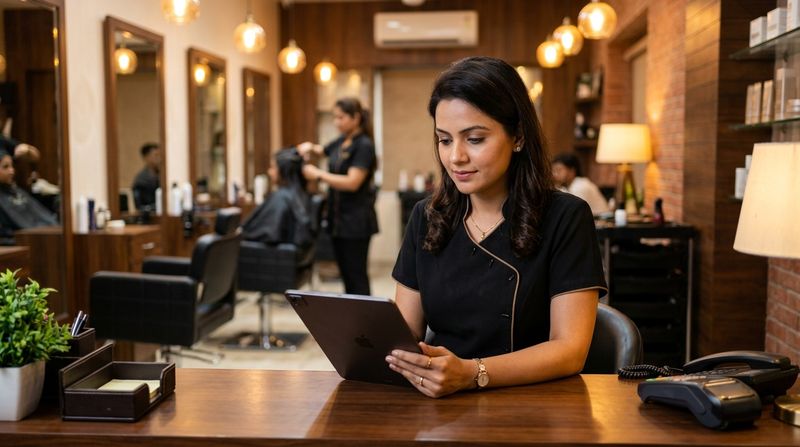
Running payroll for a single salon is already a headache. Now multiply that across three, five, or ten outlets — each with different commission structures, variable attendance, and statutory deductions — and you have a monthly nightmare that most salon and spa owners know all too well. If your team is still copy-pasting data from WhatsApp messages into Excel at the end of every month, you're not alone. But there's a better way.
Payroll software for salons is no longer a luxury reserved for large corporates. India's salon and spa sector has grown rapidly, with chains expanding from tier-1 cities into tier-2 and tier-3 markets. That growth brings operational complexity — and payroll is at the centre of it. Getting it wrong means unhappy stylists, compliance penalties, and a finance team working weekends. Getting it right means closing payroll in hours, not days.
This guide walks you through exactly what salon and spa chains need from a payroll solution — and why a generic payroll tool built for offices simply won't cut it.
Why Salon Payroll Is Different from Regular Business Payroll
Most payroll software is built for salaried office employees: fixed pay, fixed location, standard deductions. Salons and spas operate on an entirely different model.
Your senior stylist earns a base salary plus a commission on every colour treatment and hair spa service she performs. Your spa therapist gets a cut of product sales. Your front-desk staff earns an attendance bonus if they show up for all 26 working days. None of this fits neatly into a "basic pay + HRA + DA" formula.
Layer on top of that:
The result is a payroll process that is deeply manual, error-prone, and chronically delayed. If you've ever seen a trainer commission dispute, you'll appreciate how similar challenges play out in salons — as we covered in our post on how to track trainer commissions with MyGymDesk, the root cause is almost always the same: no single source of truth for variable pay.
The Commission Problem: Getting Variable Pay Right Every Month
Commission structures in salons can be surprisingly complex. A typical chain might have:
Calculating this manually from service records, POS data, and referral logs is a recipe for disputes. Staff lose trust in the numbers. Managers spend hours cross-checking. And errors still slip through.
Good payroll software for salons should allow you to define commission rules once and automatically pull service data to compute variable pay each month. When the rules are in the system, the calculation is consistent, auditable, and transparent — your stylists can see exactly how their commission was arrived at.
Multi-Outlet Attendance: The Silent Payroll Killer
Attendance is where salon and spa chains consistently lose hours every month. Here's a scenario that plays out daily across Indian salon chains:
The outlet manager at your Koramangala branch sends attendance on WhatsApp. The Andheri outlet uses a physical register. The Connaught Place location has a biometric device but nobody exports the data consistently. Head office tries to consolidate all of this on a shared Google Sheet by the 1st of the month. It's chaos.
Reliable spa payroll in India starts with reliable attendance. Your payroll software must be able to:
This is closely related to the broader problem of scaling operations across locations — something we've explored in the context of why Indian gyms can't scale without a staff portal. The lesson applies equally to salons: without centralised staff data, you cannot run a consistent, compliant payroll.
PF, ESI, and Statutory Compliance for Salon Chains
India's statutory compliance requirements are not optional, and they don't get simpler as you open more outlets. Here's what salon chains need to manage every month:
Provident Fund (PF):
ESI (Employees' State Insurance):
Professional Tax:
TDS:
Managing this across five or more outlets, each potentially registered in different states, requires a system that knows the rules — not a human who has to look them up every month. Our detailed guide on how Indian gyms can simplify PF & ESI compliance covers the compliance fundamentals that apply directly to salon and spa businesses as well.
Monthly Close Without a Spreadsheet: What That Actually Looks Like
The goal of any payroll system should be to reduce your monthly close from days to hours. Here's what a clean payroll process looks like for a salon chain using the right software:
This is the monthly payroll cycle that MGD Payroll is built to support — specifically for multi-location Indian businesses where variable pay, statutory compliance, and distributed teams make spreadsheets completely unworkable.
What to Look For in Payroll Software for Salons
Not all payroll tools are created equal. When evaluating options for your salon or spa chain, here's a checklist of what actually matters:
It's also worth comparing purpose-built options alongside generic tools. We've published a full comparison in our best payroll software for salons & spas India 2026 guide, which covers the leading options in detail.
Payroll Lessons Salon Chains Can Borrow from the F&B Sector
The restaurant industry dealt with many of the same payroll challenges — variable pay, high turnover, multi-outlet operations, tip tracking — before purpose-built payroll tools arrived. The learnings are directly applicable.
As we noted in our roundup of best payroll software for restaurants & cafés 2026, the businesses that moved to software earliest saw the biggest compliance improvements and the sharpest reductions in payroll errors. Salon chains are at a similar inflection point right now.
The common thread? The more variable your pay structure, the more you need automation — because the human brain simply wasn't designed to track 200 service transactions per stylist per month and compute commissions accurately without error.
Getting Your Salon Chain Payroll-Ready: Actionable Steps
If you're ready to move away from spreadsheets, here's how to start:
Most salon chains that follow this approach complete the transition within 4–6 weeks and close their first automated payroll in under a day.
Conclusion: Your Payroll Shouldn't Be as Complex as Your Services Menu
Salon and spa chains offer some of the most personalised, skill-intensive services in the consumer economy. Your payroll system should match that sophistication — not lag behind it on a spreadsheet tab that nobody fully trusts.
The right payroll software for salons handles commissions accurately, consolidates multi-outlet attendance, keeps you compliant with PF, ESI, and PT, and closes the month in hours rather than days. It also gives your stylists and therapists the transparency they deserve — a clear, digital payslip that shows exactly what they earned and why.
Ready to see what this looks like for your salon or spa chain? Start free with MGD Payroll and run your first payroll cycle without spreadsheets — or book an MGD Payroll demo to see the commission engine, multi-outlet attendance dashboard, and compliance tools in action.